Best Man with Van Routes in WC2 for St Giles Moves
Posted on 06/05/2026
Moving in and around WC2 can feel deceptively simple on a map. In real life, though, one-way streets, loading restrictions, busy pavements, and the sheer pace of central London can turn a short journey into a proper headache. That's why choosing the Best Man with Van Routes in WC2 for St Giles Moves matters more than most people expect. The right route can save time, reduce handling risk, and make the whole move feel calmer from the first box to the final drop-off. Simple enough in theory. In practice, it's the difference between a smooth run and a day full of delays.
Whether you're moving a flat, a few heavy items, office equipment, or student belongings, route planning in WC2 is not just about distance. It's about access, timing, parking, and the kind of local know-how that only comes from working the area regularly. Below, you'll find a practical guide to how these routes work, what to expect, and how to choose the best option for your St Giles move.
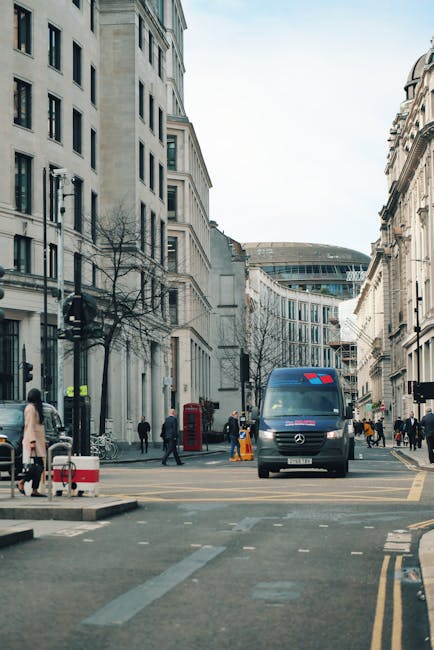
Why Best Man with Van Routes in WC2 for St Giles Moves Matters
WC2 is one of those areas where the postcode sounds compact, but the logistics can be surprisingly tricky. You've got central streets with constant traffic, narrow access points, mixed-use buildings, and delivery windows that can disappear faster than you'd like. If you're moving in St Giles, a route that looks efficient on paper may actually be awkward once you factor in turning space, bay availability, and how far the van needs to sit from the front door.
The best route is rarely the shortest one. It is the one that balances travel time, loading access, and safety. For example, a slightly longer loop that avoids a bottleneck around busy junctions may save you 20 minutes and a lot of stress. That matters when someone is carrying a wardrobe down a stairwell or trying to keep a sofa dry while a light rain starts at 4:30pm. Central London has a way of making "just two streets over" feel like an expedition.
Route planning also affects how much risk is involved. Repeated lifting, awkward carrying angles, and rushed parking can lead to knocks on furniture or, worse, injury. If you've already been looking at safe ways to lift heavy items or reading about why piano moving is not a solo job, you'll already know that the route and the handling plan should work together. One weak link and the whole move gets harder.
Expert summary: In WC2, the "best" man with van route is the one that reduces double-handling, avoids access delays, and gives the crew the clearest path from property to vehicle. That's the real win.
How Best Man with Van Routes in WC2 for St Giles Moves Works
At a practical level, route planning for a St Giles move starts before the van is even loaded. A good operator will look at origin and destination addresses, access type, item list, timing constraints, and the likely route through local streets. In busy parts of WC2, that usually means thinking about more than navigation software alone.
A smart route plan often includes three layers:
- Main driving route: the road pattern that gets the van from one point to the other with the least disruption.
- Access route: the path the crew will use to get items from the building to the van, including lifts, hallways, staircases, loading bays, or entry points.
- Contingency route: a backup option in case a road is blocked, a loading bay is occupied, or a timing slot changes at short notice.
That second layer is often overlooked, which is a pity. In a lot of St Giles moves, the actual challenge is not the drive itself; it's the last 30 metres. A van can be parked a bit further away if the route on foot is clear and safe. But if it means crossing a crowded pavement with a mattress in gusty weather, things quickly become messy.
If you're packing now, it helps to prepare in a route-aware way. The advice in expert packing guidance for a smoother move and packing and boxes support in St Giles can make loading faster, which in turn makes route timing much easier to manage.
For St Giles moves specifically, route choices often revolve around:
- avoiding the worst congestion periods
- matching vehicle size to road width and loading access
- protecting fragile or bulky items from extra handling
- keeping within any building or street loading rules
- reducing the chance of parking twice, which is annoying and inefficient, to be fair
That's why a local service matters. A crew that knows the area will usually spot the less obvious route issues before they become a problem. A sat nav can tell you where to go. Local experience tells you where not to linger.
Key Benefits and Practical Advantages
Once the route is planned properly, the benefits show up quickly. Some are obvious. Others only become clear after you've done a few moves the hard way.
- Less waiting time: Better route choice means fewer delays at traffic pinch points and fewer awkward stops.
- Lower handling risk: Shorter, clearer carry distances reduce strain and the chance of accidental damage.
- Better schedule control: If your move has a same-day deadline, small timing gains matter more than people think.
- More efficient loading: When the vehicle can be positioned well, the loading process feels much less chaotic.
- Improved protection for furniture: Fewer transfers between indoor and outdoor spaces means less exposure to scuffs, rain, and knocks.
There's also a financial side, even if it's not always spelled out. A smooth route can reduce labour time, and labour time is usually one of the biggest practical variables in a move. That's one reason people often compare a man with a van in St Giles with broader removal services in St Giles: the right fit depends on how much help, planning, and vehicle support you actually need.
Another benefit is peace of mind. Sounds vague, but it's real. If you know the route is sorted, the van has somewhere sensible to stop, and your largest items are packed to load in the right order, the day stops feeling like a gamble.
Who This Is For and When It Makes Sense
This kind of route planning makes sense for more people than you might expect. It is not just for big home removals. In fact, the tighter the move, the more valuable it becomes.
You'll usually benefit from the best man with van routes in WC2 if you are:
- moving between flats with limited access
- relocating student belongings in and out of central London
- handling office equipment or small business stock
- moving one-off bulky items such as beds, sofas, or appliances
- working to a same-day deadline
- dealing with furniture that needs careful handling, such as pianos or antiques
It also suits people who don't want to overbook a full-size removal team for a smaller job. If your move is more modest, a targeted van route and a focused crew may be the practical choice. That is exactly where man and van services in St Giles often fit well.
On the other hand, if you've got a multi-room house move, several large appliances, or a complicated office relocation, you may need something broader like house removals in St Giles or office removals in St Giles. Route planning still matters there, of course, but the service model changes.
Truth be told, a lot of moving stress comes from choosing a service that's either too small or too broad for the job. A good match saves money and reduces friction. Simple idea. Not always simple in practice.
Step-by-Step Guidance
If you want the move to run well, think in stages. The route is only one piece, but it should be built into the moving plan from the start.
- List everything that needs moving. Include awkward items, not just the obvious boxes. A lamp, monitor arm, or folding chair can change loading order.
- Check access at both ends. Measure doorways, stairs, and lift space if needed. A sofa that fits on the website photo may still be a headache on the day.
- Identify likely loading points. In central areas, this is often where the route is won or lost. For a helpful local angle, see the guidance on the best loading bays near St Giles Circus.
- Choose the vehicle size. A van that is too large can create access issues; too small means more trips. Neither is ideal.
- Plan the loading order. Put heavy stable items low and near the front where appropriate, with fragile items protected and clearly separated.
- Set a realistic time window. Allow extra margin for traffic, building access, and any last-minute delays.
- Confirm the backup plan. If a bay is occupied or the street is temporarily blocked, know the alternate spot before you arrive.
For awkward belongings, use item-specific preparation. A freezer should be handled differently from a mattress, and a piano differently again. If that sounds obvious, well, it should be. Yet people still try to move a sofa the same way they move a stack of books. That usually ends badly. Helpful reading includes freezer protection advice for moves and storage, bed and mattress moving techniques, and long-term sofa protection tips.
One small but useful habit: label boxes by room and priority, not just by contents. "Kitchen - first out" is better than "misc." when you're staring at a van full of brown boxes at 8am.
Expert Tips for Better Results
If you want the route to work in your favour, a few practical habits make a real difference. These are the kinds of details that save time without shouting about it.
- Move early where possible. The earlier slot often gives you a calmer street environment and fewer people blocking access.
- Keep the biggest items closest to the exit. That sounds minor, but it reduces shuffling and avoids the dreaded "one item buried at the back" moment.
- Use proper lifting technique. This is not the place for heroic back strain. A sensible approach beats a dramatic one every time. There's a useful refresher in our guide to lifting heavy objects safely.
- Protect floor and furniture contact points. Blankets, wrap, and corner protection are worth the small effort.
- Stay flexible on the exact stopping point. In WC2, the ideal space may change minute by minute. Adaptability matters.
If your move includes delicate or unusual items, don't improvise too much. A piano, for instance, is not something you "just sort of tilt and see." The same goes for high-value office furniture or expensive electronics. If in doubt, the specialist pages for piano removals in St Giles and furniture removals in St Giles are worth a look.
Here's a small real-world observation: the best moving days are often not the ones with everything perfect. They're the ones where the team, the route, and the paperwork are all just clear enough to keep things moving. That's it. No drama.

Common Mistakes to Avoid
Most moving problems in central London are not dramatic. They're small errors that compound. A late start. A van that can't park where expected. A missed loading window. Then suddenly everyone is sweating and someone's holding a lamp awkwardly in the doorway.
Here are the most common mistakes to watch for:
- Assuming the shortest route is the best route. It often isn't.
- Ignoring loading restrictions. A good map does not always show the real-world pain points.
- Packing too late. If the crew has to wait while you finish boxing items, the route schedule slips.
- Using the wrong vehicle size. Oversized vans can be awkward; undersized vans mean multiple journeys.
- Forgetting building rules. Lift bookings, access codes, concierge times, and service entrances can all affect the route plan.
- Not checking insurance and responsibility details. Understand who is covering what before items are loaded.
Some people also make the mistake of over-prepping the route but under-prepping the stuff being moved. A perfectly planned drive won't help much if the boxes are weak or the sofa isn't wrapped. If you're still organising supplies, look at packing boxes and moving materials in St Giles and the site's decluttering advice for upcoming moves.
And one slightly awkward but important point: don't treat the crew as if they can magically fix a bad plan on the fly. They can solve a lot, yes. But no one wants to carry a wardrobe four extra blocks because the original stop was impossible. Nobody. Not even on a good day.
Tools, Resources and Recommendations
You don't need a mountain of kit to move well, but a few tools make the route and loading process much easier. The aim is not to overcomplicate things. It's to make the move feel controlled.
- Moving blankets and wrap: Good for protecting furniture edges and polished surfaces.
- Strong boxes: Especially useful for books, crockery, and office items.
- Tape and labels: Plain, practical, and absolutely essential.
- Furniture sliders or dolly equipment: Helpful for heavier items where floors and access allow.
- Basic measuring tape: A small thing that prevents bigger problems.
- Phone maps and route notes: Keep both digital and written notes if access is fiddly.
There are also a few website resources worth using before the moving day arrives. The main services overview helps you see what type of support is available, while pricing and quotes information can help you budget more realistically. If you're looking for broader move support, the pages for removals in St Giles and removal van hire in St Giles are also useful starting points.
If your timetable is tight, you may also want to think about storage. A short-term delay in handover or completion is annoying, but not fatal if you've got a backup plan. The storage options in St Giles can help bridge that gap without panic.
Law, Compliance, Standards, or Best Practice
Moving services in London should be run carefully and responsibly. While every job is different, a few standards and good-practice habits are worth expecting from any professional operator.
First, vehicles should be insured for the work they are doing. Second, the crew should use sensible manual handling methods and not push people to lift beyond what is safe. Third, route decisions should respect local access rules, parking restrictions, and building requirements. In central London, this matters more than it may in quieter areas because the margin for error is smaller.
It is also sensible to ask about the company's approach to safety and process. A transparent provider should be happy to point you towards relevant policy pages such as insurance and safety information and the health and safety policy. If payment needs to be taken in advance or by card, it is reasonable to check the payment and security details too.
For heavier or higher-risk items, best practice is to plan more, not less. That can include additional padding, extra hands, or a specialist service. It may sound cautious, but cautious is good when the stairwell is narrow and the item costs more than the van hire. Also, if you ever need to raise a concern, knowing the company's complaints procedure is simply part of being a well-informed customer.
One more point, briefly: if you are comparing providers, make sure you understand the terms and conditions before booking. That is not being fussy. That is being sensible.
Options, Methods, or Comparison Table
There are a few different ways to handle a move in WC2. The right choice depends on how much you're moving, how much access you have, and how much help you need on the day.
| Option | Best For | Strengths | Trade-Offs |
|---|---|---|---|
| Man with a van | Small to medium moves, single bulky items, flexible scheduling | Efficient, often cost-effective, good for local routes | May be less suited to large multi-room moves |
| Man and van | Quick local relocations with some lifting support | Simple, practical, usually ideal for short-notice jobs | Capacity can be limited for bigger loads |
| Full removal service | House moves, offices, larger inventories | More support, more structure, better for complex logistics | Can cost more and may be more than you need |
| Self-arranged van hire | Experienced movers who can handle lifting and route planning alone | More control over timing | You carry the risk, the labour, and the coordination burden |
For many WC2 and St Giles moves, the sweet spot is the first or second option. They give you enough help without making the job feel oversized. If the move involves a flat, the page for flat removals in St Giles is a useful next stop. If you are a student trying to move quickly around term dates, student removals in St Giles may be the more relevant fit.
Sometimes the right answer is not "bigger service." Sometimes it is "better route, better packing, fewer items." That's where careful planning quietly wins.
Case Study or Real-World Example
Picture a typical early-morning move in St Giles. A one-bedroom flat, a couple of heavy boxes, a bed frame, a mattress, and a sofa. Nothing outrageous. Yet the route matters from the first minute. The street outside is already busy, the lift is available only for a short slot, and the loading point isn't directly outside the door.
In a well-planned version of this move, the crew checks access first, positions the van where unloading will be quickest, and loads the bulkiest furniture before the lighter boxes. The bed and mattress are protected properly, the sofa is wrapped, and the boxes are stacked in a way that keeps the final unload simple. The route into and out of WC2 is chosen to avoid unnecessary holds near busier junctions, and the driver keeps a backup stop in mind in case the planned bay is occupied.
What happens next is usually quite unglamorous, which is exactly the point. Fewer pauses. Fewer "wait there a second" moments. Less re-handling. The move is not magical, just organised. And honestly, that's what most people want.
In a less successful version, the van arrives late, the bay is unsuitable, and the crew ends up carrying items much farther than expected. The sofa gets a bit of wear at a doorway corner, someone's back starts complaining, and the whole thing takes longer than necessary. Same flat. Same furniture. Different route mindset.
The lesson is simple: in central London, the route is part of the service, not a side detail.
Practical Checklist
Use this checklist a day or two before the move. It keeps the route, the items, and the timing aligned without overthinking it.
- Confirm the pickup and drop-off addresses in full
- Check access times, lift bookings, and any building instructions
- Identify the best loading point and a backup option
- Measure large furniture and clear hallways where possible
- Pack fragile items securely and label boxes clearly
- Separate valuables, paperwork, and essentials for easy access
- Decide which items need specialist handling
- Check insurance and safety information before booking
- Plan for weather, especially if items may wait outside briefly
- Keep your phone charged and available for coordination on the day
If you want a bit of extra breathing room, declutter before the move. Less volume usually means a cleaner route, fewer lifts, and less pressure at the destination. It's a small change that can have a surprisingly big effect.
Conclusion
The best man with van routes in WC2 for St Giles moves are the ones that make the whole job feel lighter, safer, and more predictable. That means local knowledge, sensible timing, good access planning, and the right type of moving support for the size of your job. The route itself matters, yes, but so does everything around it: packing, loading order, compliance, and how quickly the crew can move between the property and the van.
If you're preparing for a move in St Giles, don't leave route choice as an afterthought. A little planning now can prevent a lot of stress later. And if your move includes awkward furniture, fragile items, or a tight deadline, a local man with a van service can make a much bigger difference than you might think.
Get a free quote today and see how much you can save.
Moving day should feel like forward motion, not a scramble. Get the route right, and everything else has a better chance of falling into place.